


AI is reshaping how teams identify, engage, and convert potential customers. Integration of AI in sales processes has become essential for sustaining growth. Just a year ago, AI was mainly capable of answering common queries and analysing large volumes of data. Now, AI has progressed from processing information to taking action. Sales AI agents can automate tasks, making the management of complex sales processes even smoother. In this comprehensive guide, we’ll explore:
- The role of AI in sales processes
- The benefits of implementing AI for sales
- Practical ways to use AI for lead acquisition, with a focus on Cynthia, an AI (SDR) agent
- Future trends that will shape the landscape of AI in sales.
What Is AI in Sales?
Sales AI can enhance human tasks to improve sales process efficiency. Far from being a simple automation tool, AI in sales acts as a virtual team member, capable of handling complex tasks, providing deep insights, and even making decisions to support human sales professionals. Some widely used applications of Sales AI include sales prospecting, real-time sales insights, customer engagement, and sales process optimisation. Following are the key aspects of AI for sales automation:
1. Optimizes specific sales goals
Sales AI agents can help you achieve specific sales goals, from pipeline creation, deal acceleration, and conversion rates to win rates. AI can identify and qualify leads at scale, automate follow-ups and personalise outreach.
2. Influences key decision makers in B2B
Sales AI agents can identify key stakeholders within target organisations. Personalised content can be generated at scale for each influential role. AI SDRs can also orchestrate multi-touch and multi-channel campaigns to target the B2B buyers group.
For example, an AI SDR might create a sequence of LinkedIn messages, emails, and content shares for a CFO while engaging technical stakeholders with more product-focused information.
3. Unifies view for segmented sales teams
Products or geographies may segment your sales team, and they may not have complete insight into your customers. AI can aggregate and analyse data across product lines or geographies.
Cynthia: An advanced AI (SDR) agent
AI SDRs (Sales Development Representatives) are AI-powered tools that automate and enhance various aspects of the sales process. Cynthia is an advanced AI SDR that can transform sales outreach.
Cynthia, an AI SDR sales agent, uses a conversational interface to analyse preferences and identify promising leads for your business. She enriches leads with data from sources like Apollo or LinkedIn, providing sales teams with comprehensive, up-to-date information for prospecting.

Cynthia generates highly researched personalised outreach sequences. These messages resonate with each prospect’s needs to improve relevance and impact. Furthermore, Cynthia automates lead nurturing and follow-up processes, ensuring consistent engagement throughout the sales cycle.
By combining these advanced features, Cynthia exemplifies the potential of AI to improve productivity and drive better results in the competitive B2B landscape.
The Need for AI in Sales Automation
When a business activity is fragmented into silos, results are hindered by the problem of friction. The fragmentation of sales activities across various tools and departments has led to inefficiencies and missed opportunities. Sales reps often find themselves manually shortlisting targets, researching individual prospect needs, drafting personalised emails, and managing follow-ups – all while trying to match product features to customer requirements. This disjointed process led generative AI to overturn the existing approach. Consider these compelling statistics:
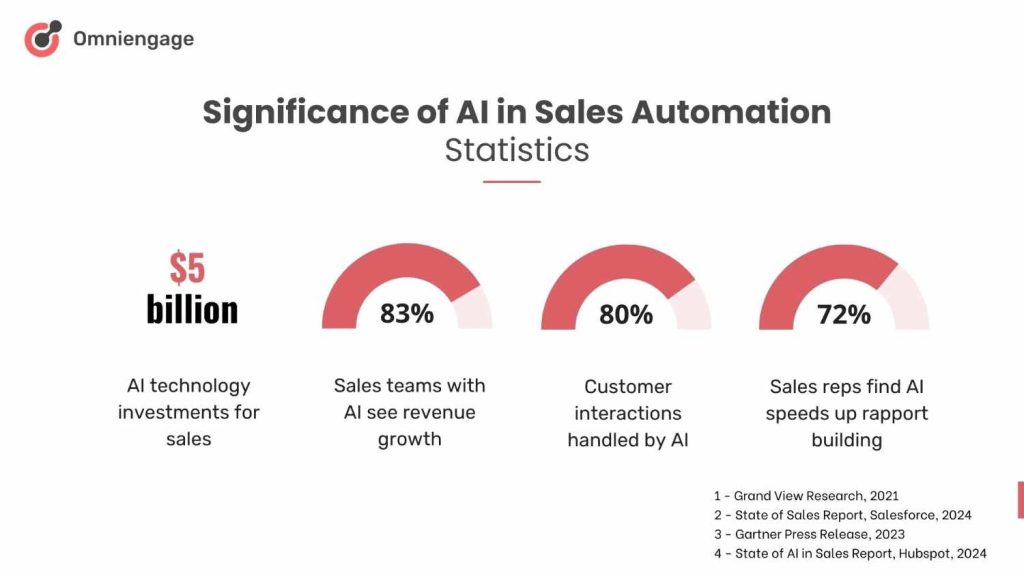
$5 billion in AI technology investments for sales by 2025
This substantial investment underscores the industry’s recognition of AI’s potential to revolutionise sales processes.1 Companies are investing in AI systems that can identify customer behavior and suggest optimal times for outreach.
83% of sales teams with AI see revenue growth
The top improvement from AI is to sales data quality and accuracy. AI can analyse vast amounts of data to identify patterns and predict which leads are most likely to convert, allowing sales teams to focus their efforts more effectively (State of Sales, Salesforce, p.15).2
80% of customer interactions handled by AI by 2026
This projection by Gartner highlights the growing trust in AI’s ability to manage customer relationships effectively.3 AI-powered chatbots can handle initial customer inquiries 24/7 – qualifying leads and scheduling appointments without human intervention.
72% sales reps find AI speeds up rapport building
This statistic reflects the positive impact AI is having on sales professionals’ performance, driving businesses to invest in AI.4 These tools enable teams to have better data quality, understand customer needs, prospect communication, and personalisation (State of Sales, Salesforce p.15).2
Benefits of Implementing AI in Sales
AI works on recurrent neural networks to mirror the inputs received to what is already there in its data source. With the help of Long Short Term Memory (LSTM), it can recall orders and perform those actions autonomously. Let’s explore the key benefits of integrating Sales AI Agents into your strategy.
1. Supercharging Lead Generation and Qualification
Sales AI agents can enhance your lead generation process by rapidly expanding and refining your prospect pool. By analysing vast amounts of data, these tools can identify high-quality leads that closely match your ideal customer profile.
For example, after understanding your buyer persona based on your primary research, a Sales AI agent can scour databases and online platforms to find similar prospects, significantly broadening your reach. This data-driven approach ensures that your sales team focuses on leads with the highest potential for conversion.
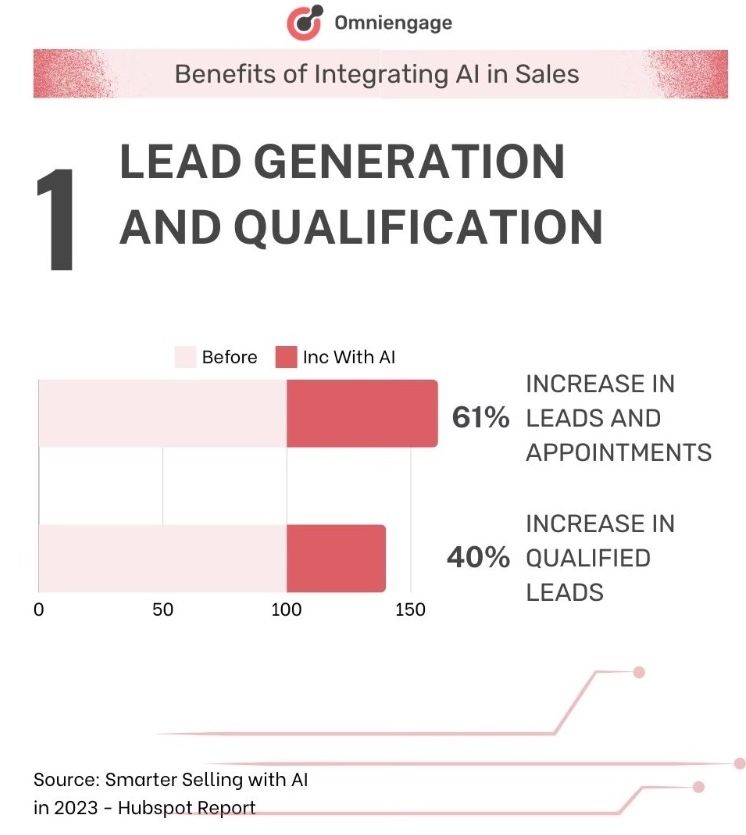
Statistic: Implementing Sales AI has led to a remarkable 61% increase in leads and appointments through data-driven identification.5 Moreover, AI-powered analysis has shown to deliver a 40% increase in qualified leads by pinpointing top-quality prospects within specific niches (Smarter Selling with AI, Hubspot, p.24).6
2. Personalizing Customer Outreach at Scale
One of the most challenging aspects of sales is crafting compelling, personalised outreach for cold prospecting. Sales AI excels at creating compelling emails to capture attention and elicit more responses.
Consider a scenario where an AI agent analyses a prospect’s online presence, recent company news, and industry trends. It then crafts an email that addresses the prospect’s specific pain points and offers relevant solutions, significantly increasing the chances of engagement.
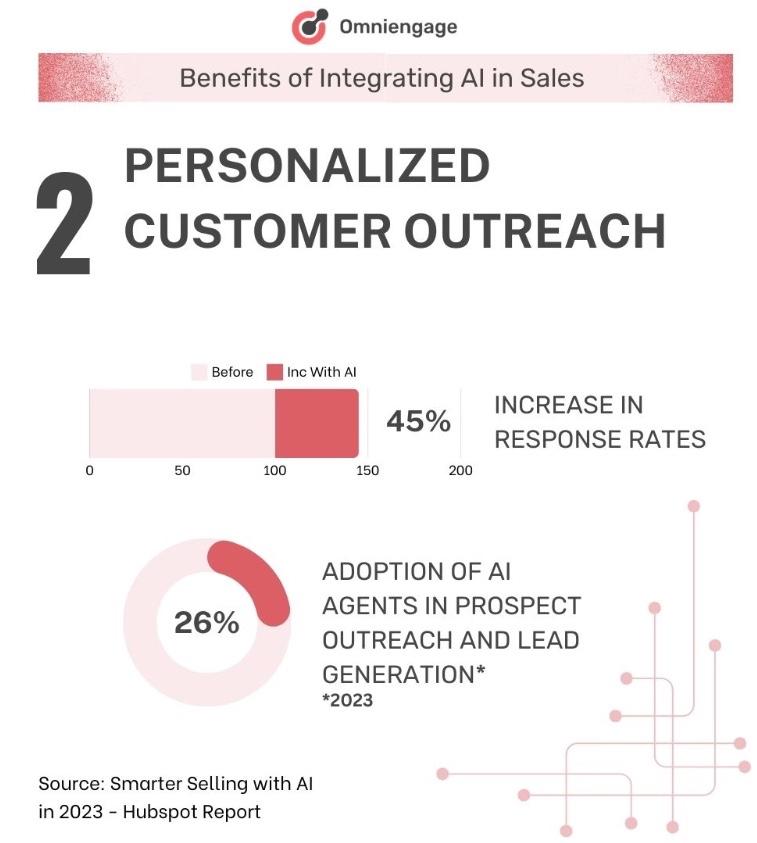
Statistic: AI-generated personalised pitches have demonstrated a 45% increase in response rates.4 Additionally, 26% adoption is seen for prospect outreach and lead generation (Smarter Selling with AI, Hubspot, p. 7).5
3. Boosting Sales Performance and Win Rates
Sales AI tools can prioritize leads based on their likelihood to convert, ensuring that your sales representatives invest their time and effort where it matters most. When the sales team focuses on the most promising leads, it improves win rates.
For instance, an AI agent can offer predictions on which leads are most likely to convert. This enables your team to allocate resources more effectively.
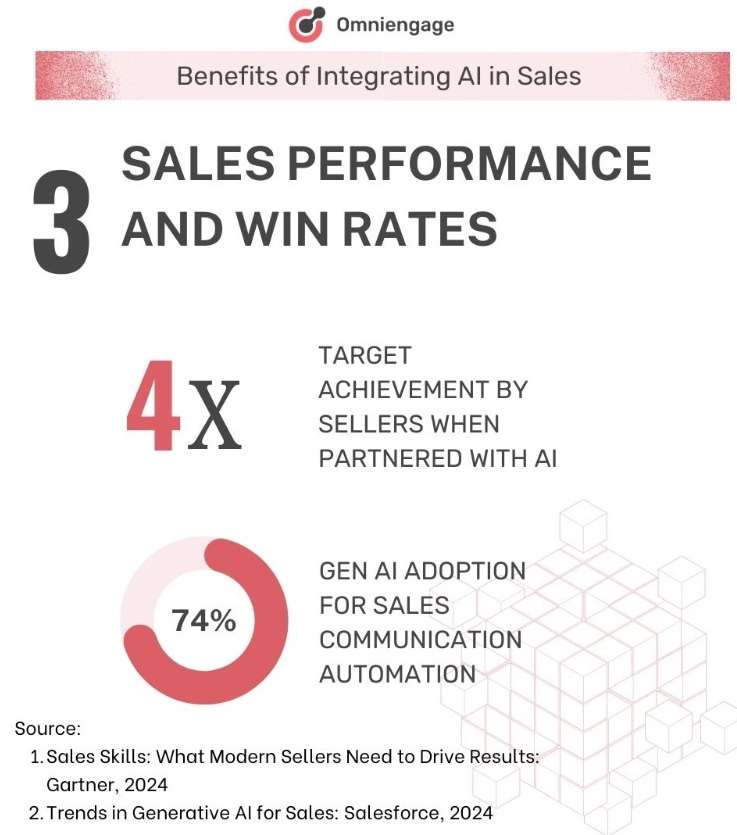
Statistic: Sellers who excel in AI partnership are nearly 4 times more likely to meet or exceed quota compared to their peers (Gartner Report, 2024, p. 6).7 Additionally, 74% of users of generative AI use it to automate sales communications (Salesforce, Trends in Gen AI Report, p. 5).8
4. Maximizing Sales Team Productivity
Sales AI improves productivity by saving time for deal closures. It reduces the time sales teams spend on non-selling tasks like automating follow-ups and researching prospects so they can allocate more time to direct sales efforts. It speeds up the sales process of moving prospects through the funnel, resulting in quicker conversions.
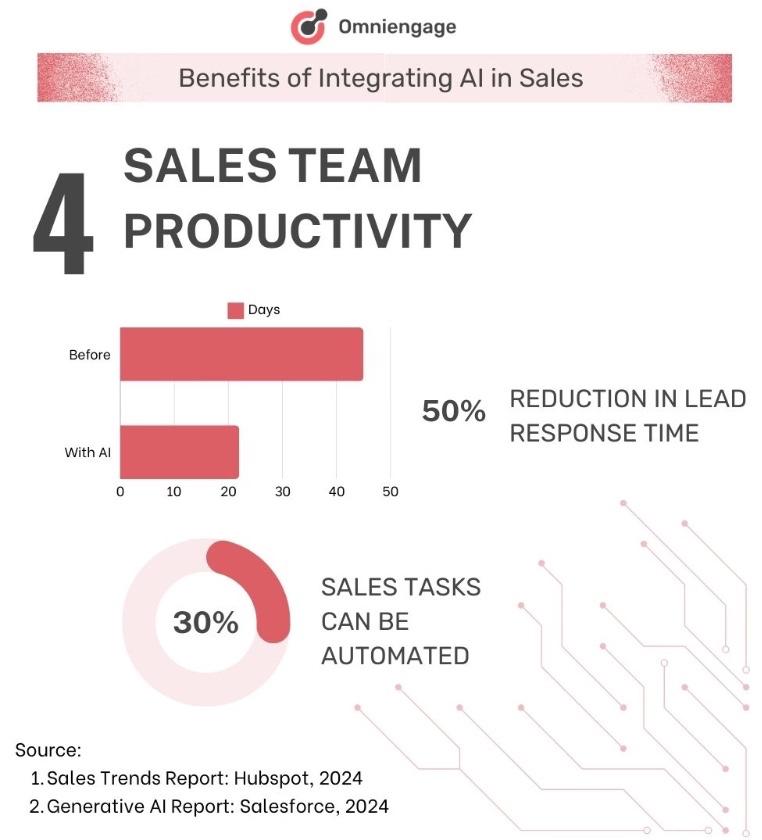
Statistic: 81% of sales pros say AI can help them spend less time on manual tasks (HubSpot 2024 Sales Trends, p.8).9 Companies utilising Sales AI have reported a 50% reduction in lead response time due to prompt and efficient communication. Furthermore, up to 30% of sales tasks can be automated with AI, translating to a significant increase in time available for actual selling.10
With AI, you can transform your sales processes, achieving higher efficiency, better lead quality, and improved conversion rates. As we continue to explore the capabilities of these AI-powered tools, it’s clear that they will play an increasingly crucial role in shaping the future of sales strategies and customer engagement.
Strategies for Using AI Tools for Sales Success
Now that we’ve seen the big picture—that AI can provide more accurate targeting and highly personalised outreach – let’s zoom in on how an agent can be implemented. To see these results come together in practice, let’s look at Cynthia, an SDR that exemplifies the power of using AI tools for sales.
1. Targeting ICPs and Buyers
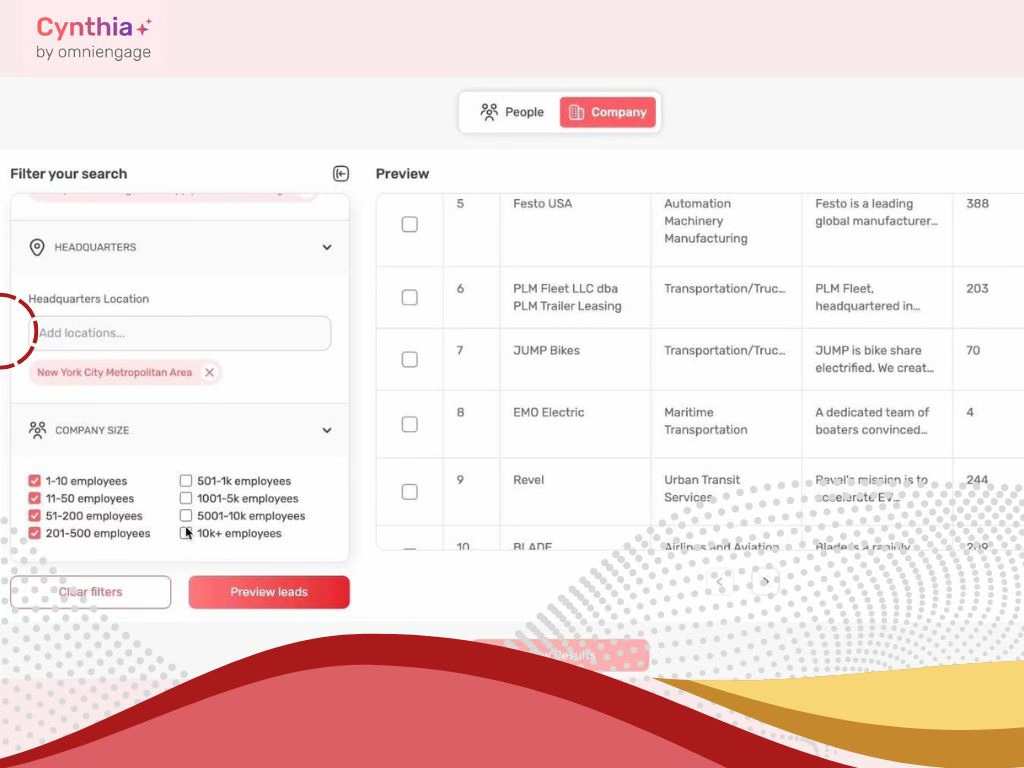
AI tools can find and focus on potential customers who are most likely to be interested in your products or services. These tools look at data to create detailed pictures of ideal customers, which allows your sales teams to know who to approach.
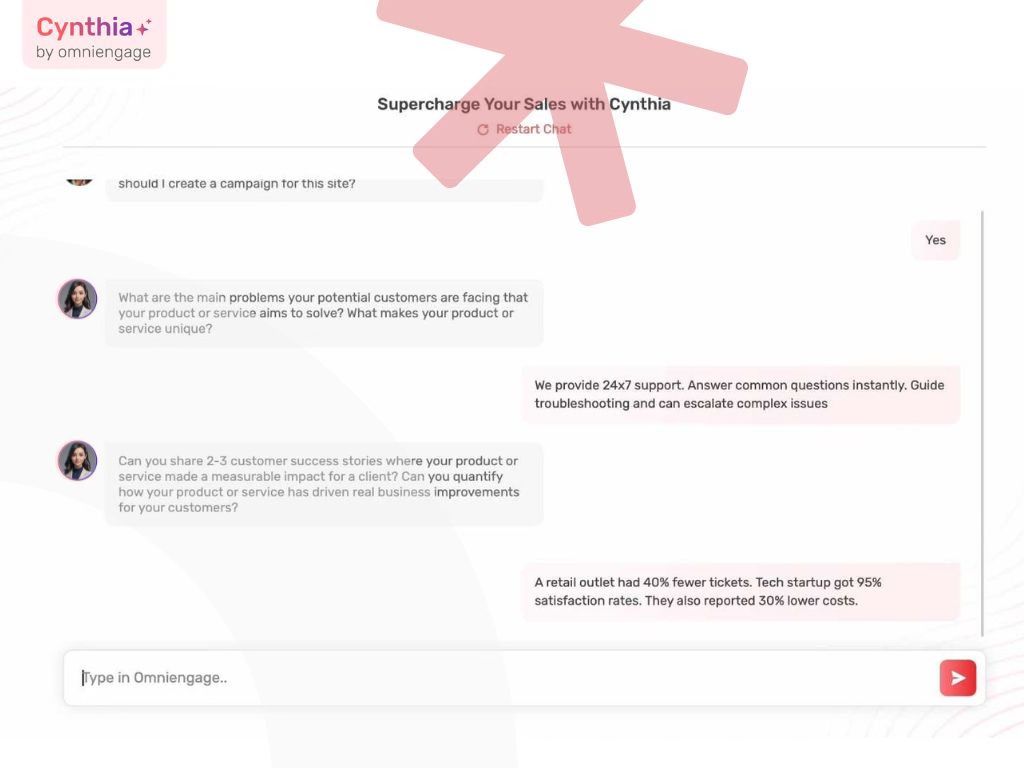
Cynthia can target potential customers by creating an ideal customer profile (ICP) and buyer personas for your business. She does this by evaluating your company’s goals and the common challenges faced by the different groups of users you serve. This information is then used to find companies similar to your current clients.
Cynthia can also analyse segmented target lists. Using a conversational interface, you can discuss your top clients with Cynthia to create detailed ICPs. She also retrieves LinkedIn data to develop comprehensive buyer personas based on job titles and your value proposition.
2. Prospect Research: Company, Industry, and Pain Point Analysis
AI-powered tools gather lots of information quickly, giving sales teams useful insights about possible customers.
Company-specific research
Cynthia is able to research prospects by collecting and analyzing information from various sources. She effectively gathers data on a company’s background, key markets, products, and leadership team. This enables Cynthia to create personalised emails for specific prospects. She can review press releases, annual reports, and other public documents to identify strategic priorities and recent developments.
Industry research
Your conversations with Cynthia allow her to delve deeply into industry trends and analyse large amounts of data related to your sector over the last six months. This enables her to understand how your solution aligns with industry needs and then position your brand as a solution to the industry-specific pain point to engage prospects and increase response rates.
Pain-point research
By analysing various data sources, Cynthia AI can provide insights into the unique problems any prospective company may be facing.
3. Designing Effective Touch Sequences
AI creates personalized outreach plans using different communication methods, making it easier to connect with potential buyers.
Cynthia simplifies the process of designing a strategic touch sequence to reach challenging-to-access buyers. She customises an outreach sequence that unfolds over a specified time, incorporating multiple touchpoints across different channels.
This personalised sequence can be created for a large list of selected contacts. On the dashboard, users can view and customise a set number of unique interactions. These touchpoints include a combination of email outreach, LinkedIn connections, and messages. A multi-channel approach makes it easier for sellers to connect with hard-to-reach buyers.
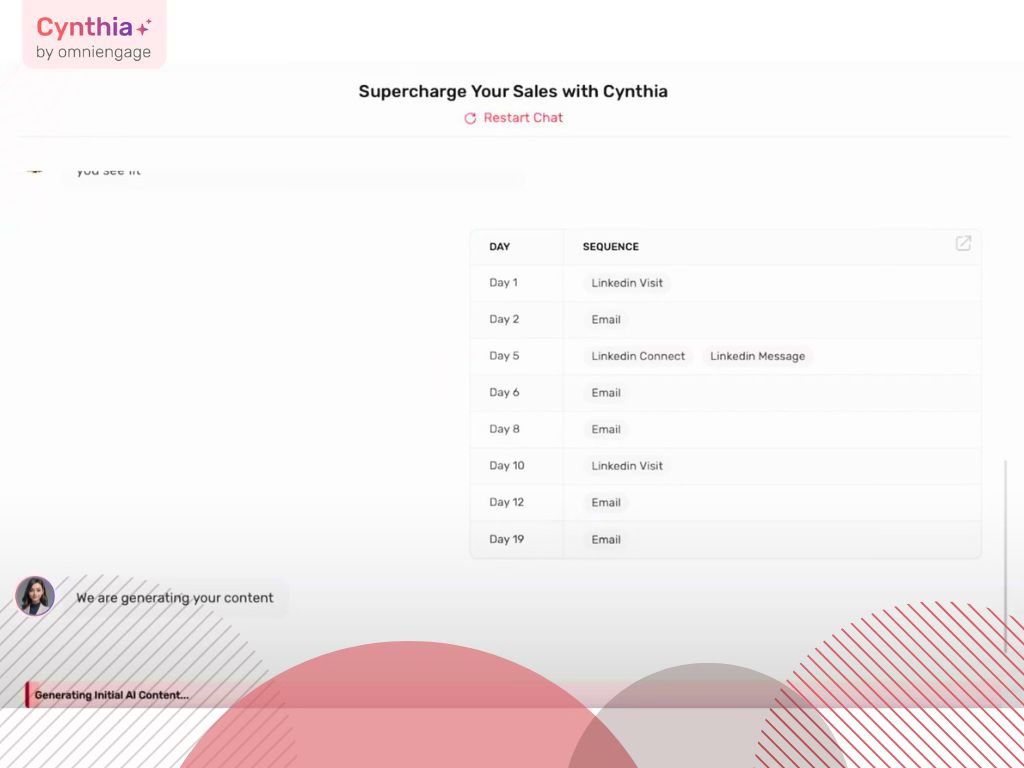
Cynthia AI optimises the sequence by determining the most effective order, timing and content for each interaction. Each touchpoint builds upon the last using AI-powered strategy, creating a coherent and engaging narrative that resonates with the target audience and maximizes the likelihood of a positive response.
4. Creating Value-Based Pitches
Value-driven offers are customized proposals that directly address a prospect’s specific needs, challenges, and goals. These offers show a deep understanding of the prospect’s situation and clearly explain how the solution will bring tangible benefits. AI, like Cynthia, is great at creating these offers because it can quickly process large amounts of data and generate insights.
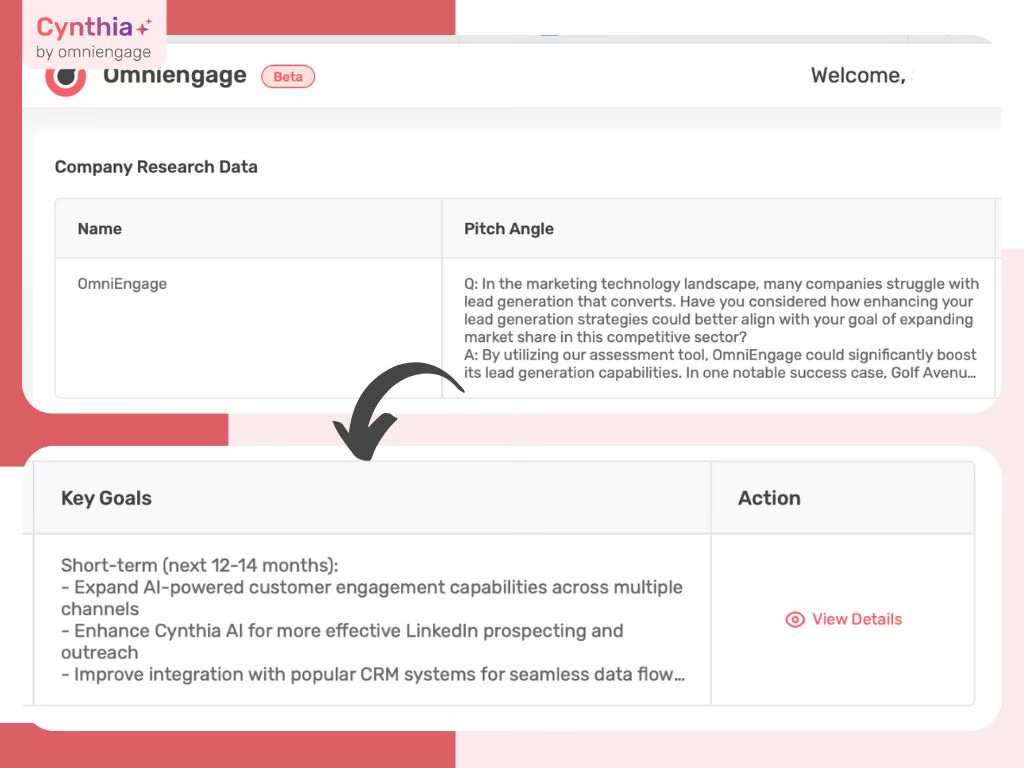
Using research findings, Cynthia tailors messages that resonate with each prospect’s unique situation. Cynthia can construct a compelling business case for why a particular company’s decision-maker would be interested in the solution, customising the argument to the prospect’s specific context.
5. Hyper-Personalizing Outreach
AI allows sales teams to create messages that feel personal and relevant to each prospect they’re trying to reach.
Cynthia addresses a prospect’s unique objectives and needs at three levels:
- Individual: Understanding the specific role and challenges of the decision-maker
- Company: Aligning with the organization’s goals and pain points
- Industry: Contextualizing the offer within broader sector trends
For example, Cynthia can summarize a company’s strategic priorities from various sources and demonstrate how a solution aligns with achieving these goals.
Value proposition alignment
AI can match what you’re offering with what the customer actually needs, making your message more appealing.
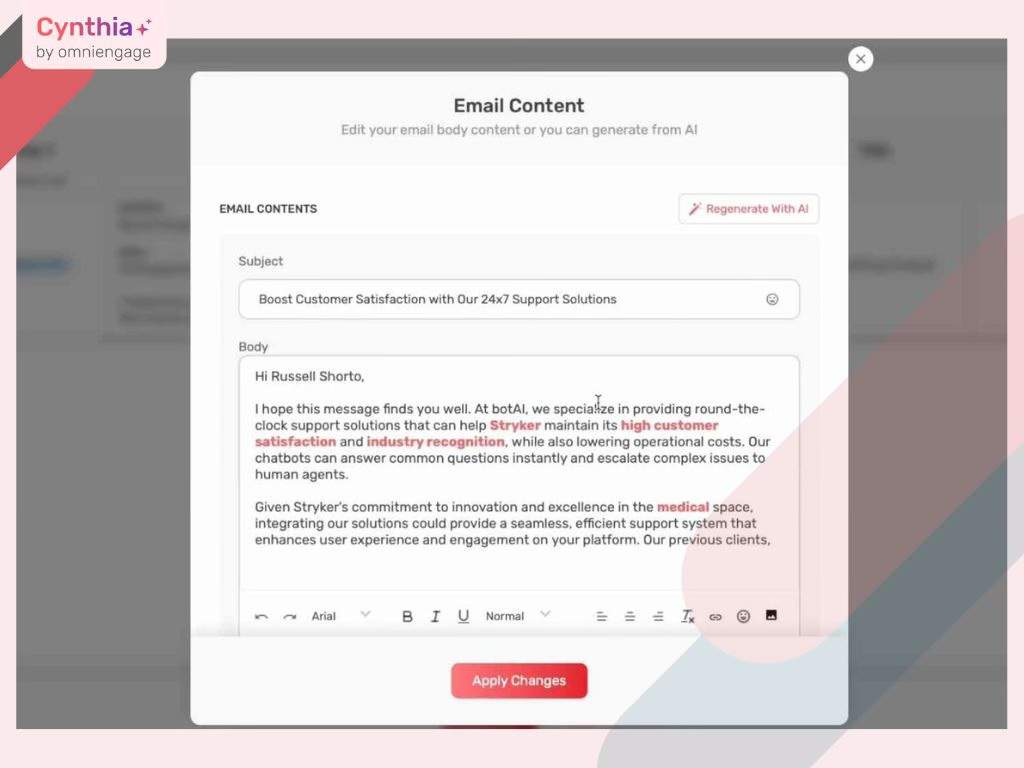
Cynthia aligns value propositions with pain points by analyzing key points from annual reports, webpages, and other sources to craft persuasive emails that address specific challenges. She can update value propositions to align precisely with the buyer’s pain points, ensuring each communication remains relevant and compelling.
Incorporating social proof
Including examples of how others have benefited from your produc can make your message more convincing.
To enhance credibility and trust, Cynthia includes relevant social proof in messages. She summarizes recent trends at target companies and highlights aspects related to the offered solution, providing context and validation for the value proposition.
Future Trends in AI for Sales Automation
Generative AI has evolved from knowledge-based tools to “agents” that can execute complex, multistep workflows across digital environments. These agents are powered by AI foundation models like large language models. AI agents can plan actions, use online tools, collaborate with other agents and humans, and learn to improve performance. They are capable of handling highly variable inputs and outputs. In addition to this, they handle unexpected situations in complex workflows, adjusting on the fly where traditional systems might fail.
Today you can direct an AI agent using natural language, and they can work with existing software tools and platforms. This evolution allows for automation of complex use cases that were previously difficult to address as they required nuanced judgment.
Autonomous agentic actions
AI sales agents will be able to plan their actions, use online tools to complete tasks (like researching leads or scheduling meetings), collaborate with other agents and sales team members, and learn to improve their performance over time.
Multi-agent systems for workflows
Future sales processes may involve multiple AI agents, each with specialised roles. Each AI agent will have specialised roles to handle complex tasks and workflows. For example, one agent could act as a relationship manager handling communications, while another could analyse financial data.
Integration with existing tools
AI agents will work across various software tools in the business ecosystem, such as CRM systems, marketing platforms, and analytics tools, improving efficiency and data flow between these systems.
Enhanced transparency and explainability
Advanced AI systems will be able to show their work, allowing sales professionals to quickly verify the chain of tasks and data sources used to produce insights.
Adaptive and context-aware assistance
Built on next generation foundation models, AI tools for sales will handle a wide variety of scenarios. AI agents will adapt to unexpected situations in real-time to provide more flexible and advance sales support.
Wrap Up
As we’ve explored in the blog, AI is changing the sales landscape. From intelligent targeting and in-depth prospect research to strategic outreach sequencing, value-driven offer creation, and hyper-personalized communication, AI tools like Cynthia are transforming every aspect of the sales process.
Sales teams can dramatically increase their productivity, improve lead quality, and drive unprecedented growth when partnered with AI. Learn about your business maturity:
- Assess your current sales workflow and identify areas for AI integration.
- Start small—choose one area to implement AI and expand from there.
- Invest in training your team on AI for sales automation.
- Continuously monitor and refine your AI-enhanced processes.
Ready to experience the power of AI in your sales operations? Get started with Cynthia, AI Sales Development Representative. Don’t just adapt to the future of sales—lead it. Try Cynthia now for free for research based prospecting.

Further Reading
- Sales Intelligence Market Size and Trend Analysis Report ↩︎
- State of Sales Sixth Edition: Salesforce Report, 2024 ↩︎
- Gartner Press Release, Oct 2023 ↩︎
- Creative AI Uses by Hubspot ↩︎
- AI in Sales Statistics: Rapid Growth and Impressive Performance Gains ↩︎
- Smarter Selling with AI in 2023 by Hubspot ↩︎
- Sales Skills: What Modern Sellers Need to Drive Results: Gartner Report, 2024 ↩︎
- Trends in Generative AI for Sales, Salesforce Report ↩︎
- Hubspot Sales Trends Report, 2024 ↩︎
- Salesforce Report: Sales Teams Using AI 1.3x More Likely to See Revenue Increase ↩︎