

Sales teams are rushing to adopt AI tools, with spending on AI sales technology projected to grow significantly. From automated outreach to intelligent prospecting, AI promises to transform how we connect with potential customers. But with this rush comes confusion – AI SDR challenges loom while tackling ineffecient workflows. Understanding the right solution for sales automation can be crucial – especially between AI SDRs and AI Sales Agents.
Many sales leaders invest in AI solutions without fully understanding the key differences between these tools. This leads to misaligned expectations, poor implementation, and frustrating results. Teams end up with sophisticated technology that their needs don’t match or basic tools that can’t deliver the advanced capabilities they’re looking for. In this blog, you’ll learn more about:
- Common AI SDR challenges during deployment
- The fundamental differences between AI SDRs and AI Sales Agents
- How each tool approaches lead processing and engagement
- Best practices to overcome these challenges
10 Critical AI SDR Challenges Teams Face
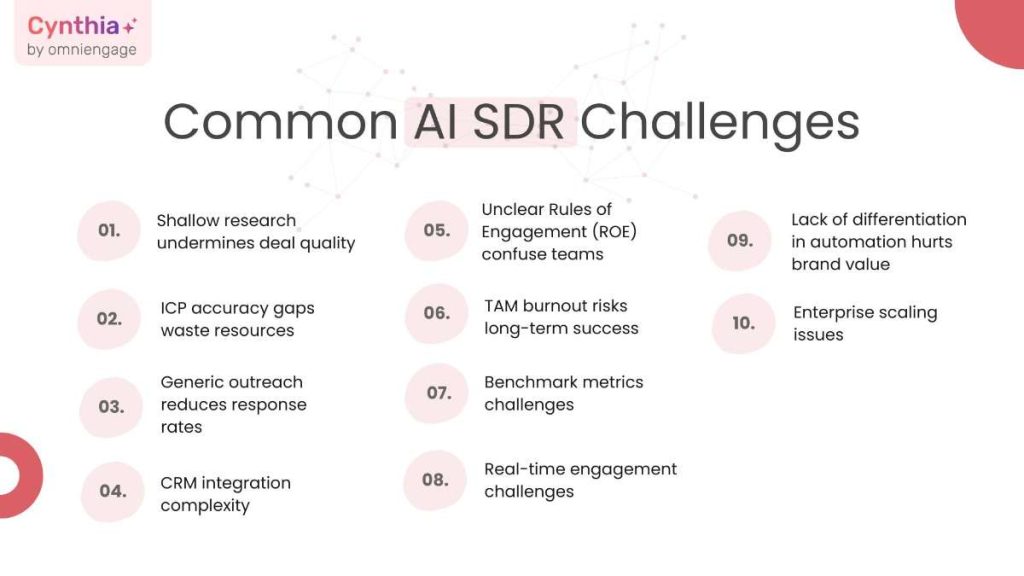
1. Shallow research undermines deal quality
Current AI SDRs are stuck in surface-level research mode – primarily doing basic web scraping and LinkedIn data collection. They’re missing the nuanced, contextual research that makes outreach compelling.
2. ICP accuracy gaps
Most AI tools fall short of the 85% accuracy benchmark when identifying ideal customer profiles. They analyse company websites and value props but often misinterpret the signals that would make a prospect truly qualified.
3. Generic outreach reduces response rates
We’re seeing a real tension between scale and authenticity. 1:1 personalisation can feel forced and “stalker-like” (“I saw you liked Bob Smith’s post…”), while generic messages don’t convert.
4. CRM integration complexity
The continuous sync between AI outreach and CRM systems is messier than expected. It’s not just about updating records – it’s about maintaining accurate relationship status and preventing duplicate touchpoints.
5. Unclear Rules of Engagement (ROE) confuse teams1
When you have multiple sellers working accounts, AI tools struggle with the complexity of human sales relationships. They can’t easily navigate scenarios like closed-lost deals or existing relationships.
6. TAM burnout risks long-term success
There’s a risk of burning through your Total Addressable Market too quickly. AI tools can efficiently blast through contact lists, but they might damage future opportunities if not properly constrained.
7. Benchmark metrics challenges
Even with AI, hitting key performance indicators remains tough. We’re talking about getting above 1% reply rate on cold outreach, achieving a 10% positive reply rate, and converting 20-25% of those into meetings.
8. Real-time engagement challenges
AI falls short during live sales conversations. It can’t effectively process real-time dialogue and provide contextual recommendations while considering the history of account interactions.
9. Lack of differentiation in automation hurts brand value
Most AI SDR tools offer similar basic functionality, making it hard to stand out. The standard package of LinkedIn scraping, email matching, and high-level cold email generation isn’t enough anymore.
10. Enterprise scaling issues
The complexity compounds at scale. Managing AI across larger teams and multiple accounts introduces risks of cross-communication, duplicate outreach, and potential damage to valuable relationships.
These challenges highlight where we are with AI SDR technology – it’s promising but still evolving. Sales leaders must understand these limitations to build effective processes combining AI efficiency with human judgment. The tools are helpful, but they’re not the silver bullet many vendors promise.
How the Sales AI Technology Works
AI Sales Agents and AI SDRs (Sales Development Representatives) as two different types of digital assistants for your sales team. While they both help with sales, they work in very different ways:
- AI SDR: AI SDRs are like having a digital assistant that follows a set playbook. They’re good at handling basic tasks and following simple rules.
- AI Sales Agents: AI agents are more like having a smart partner that learns and adapts. They can change their approach based on what works and what doesn’t.
If you’re curious about what’s happening “under the hood” of these AI tools:
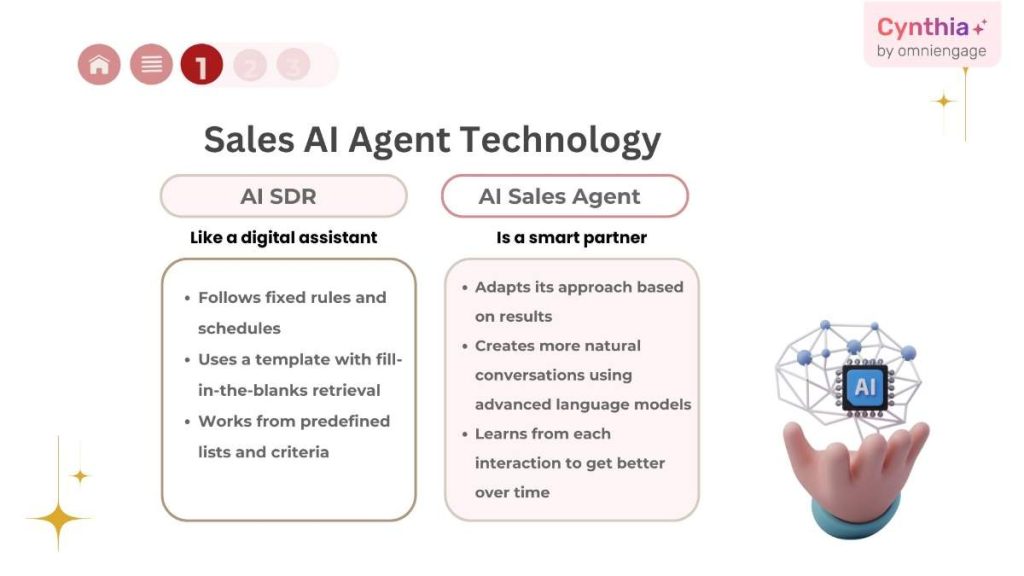
Think of it like the difference between a vending machine (AI SDR) and a helpful store clerk (AI Sales Agent) – one follows fixed rules, while the other adapts to help you better.
The right choice depends on your specific needs, but understanding these differences helps you make a better decision for your team.
Remember: While AI can make sales more efficient, it’s still important to maintain the human touch in your customer relationships. The best results often come from finding the right balance between AI automation and personal interaction.
AI SDRs vs AI Sales Agents: Which Tool Drives Your Goals
1. How Each Tool Processes Lead Data
Ever wondered what happens when a new lead enters your sales pipeline? Let’s pull back the curtain and see how these AI tools really work with your prospects.
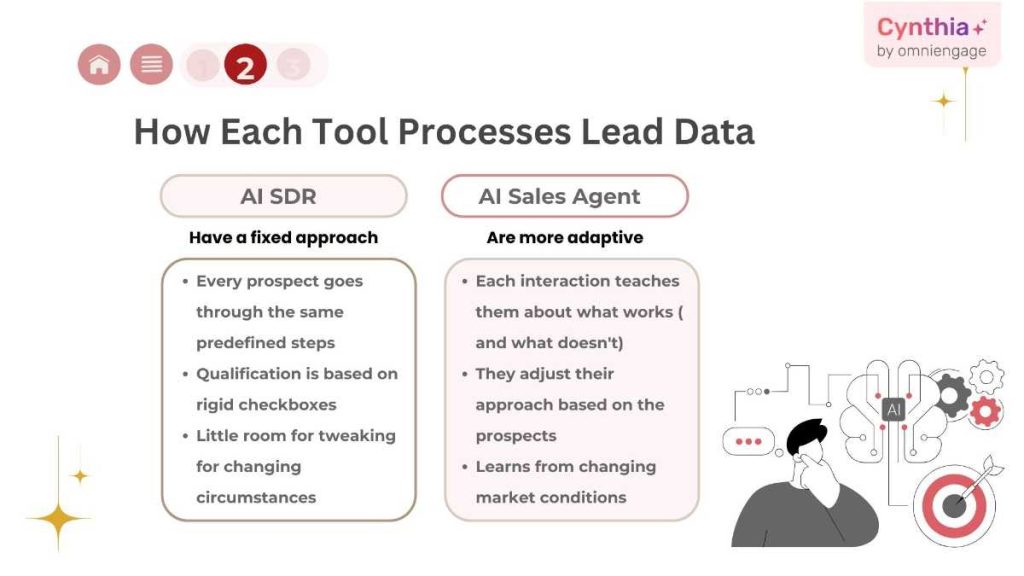
AI SDRs operate like fixed-route systems having rule-based paths for lead processing. They execute specific if-then sequences, which can miss valuable opportunities that don’t precisely match their criteria. This linear approach limits their ability to adapt to unique prospect situations.
In contrast, AI Sales Agents function adaptively, continuously learning from successful interactions to refine their approach. They analyse patterns in successful deals and adjust their strategies based on prospect behaviour, leading to more dynamic and effective lead engagement. This adaptability makes them more effective at identifying and nurturing promising opportunities.
2. How They Connect with Prospects
Think about the last great sales conversation you had. What made it work? It probably wasn’t a robotic, one-size-fits-all approach. This is where the real difference between AI SDRs and AI Sales Agents becomes clear.
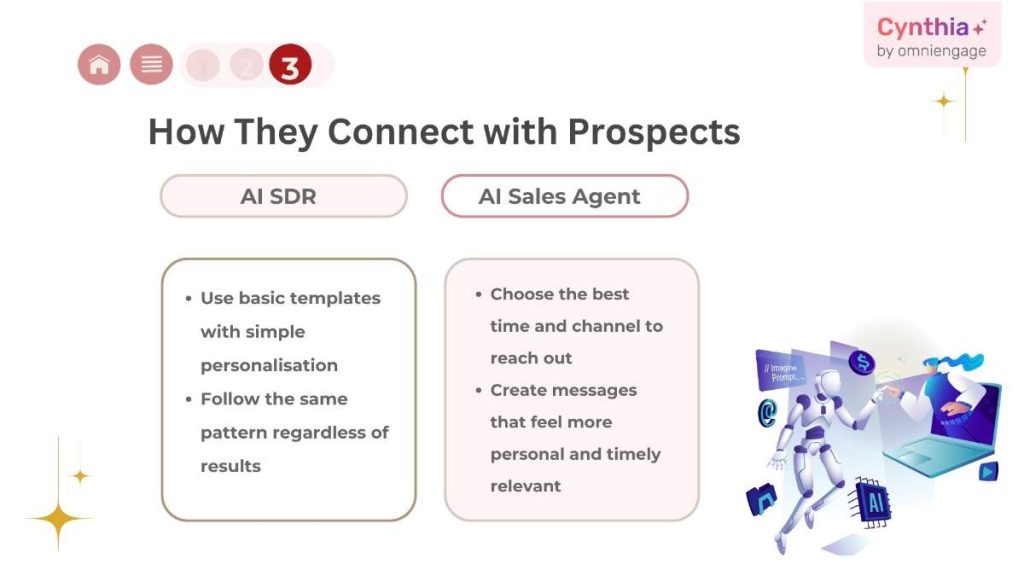
AI SDRs follow a simple playbook – sending templated messages like clockwork, swapping in names and companies. It’s like a digital version of mail merge. But AI Sales Agents? They’re more like skilled sales pros who read the room. They analyse when prospects are most responsive, craft messages that resonate with specific pain points, and continuously refine their approach based on what gets results.
Are you looking to boost your response rates? The choice between basic automation and intelligent engagement could make all the difference.
3. How the Tools Coordinate Across Sales Teams
Imagine running a busy restaurant where servers keep approaching the same table, not realising their colleague just took the order. Frustrating, right? This same AI SDR challenge plays out in sales teams, especially when multiple reps work in the same territory.
AI SDRs can lead to an awkward duplication of outreach and confused customers. AI Sales Agents, however, act more like a smart reservation system. They maintain clear communication channels, prevent overlapping outreach, and ensure prospects aren’t bombarded with conflicting messages.
The difference? AI agents give you a unified view of your sales in one single dashboard.
4. Why Personalisation Architectures Matter
Ever received a sales email that felt like it was written just for you, only to discover it was a barely disguised template? There’s a world of difference between basic personalisation and genuine connection.
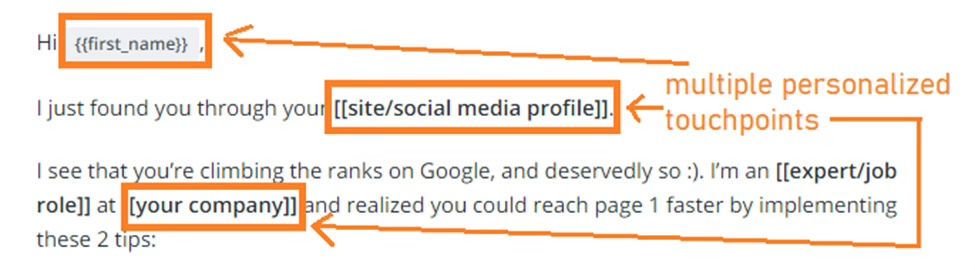
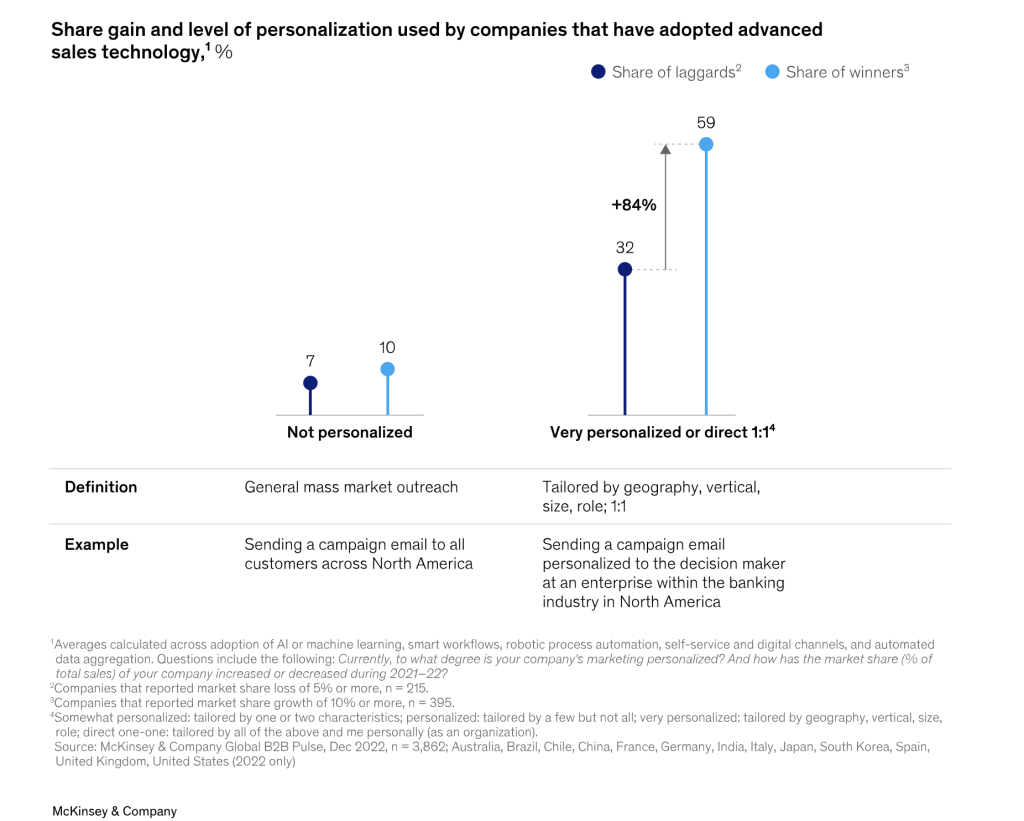
AI SDRs handle personalisation like a mass mailer – they’ll slot your name and company into pre-written templates, but that’s about it. It’s the equivalent of a “Dear Valued Customer” letter. AI Sales Agents, on the other hand, craft messages that feel authentically personal. They analyse communication patterns, learn from successful interactions, and adapt their tone to match each prospect’s style. McKinsey’s research shows this sophisticated personalisation can boost engagement rates by up to 3x.
The result? Messages that actually resonate rather than just reaching the inbox.
How to Overcome AI SDR Challenges for Maximum ROI
The decision between AI SDRs and AI Sales Agents isn’t just about technology – it’s about matching the right tool to your business goals. Here’s what matters for your decision:
- How many leads you’re handling
- How personal you need your outreach to be
- How complex your sales process is
- How many salespeople need to use the system
Consider your scale and sophistication for tool choice.
If you’re running high-volume, straightforward outreach, an AI SDR might be all you need. But if you’re nurturing valuable leads through a complex sales cycle, an AI Sales Agent’s smarter approach could be worth the investment.
Look at your team dynamics too.
Multiple salespeople working in the same territory? AI Sales Agents’ advanced coordination capabilities could prevent costly overlap and confusion. Simple, one-person operation? An AI SDR’s basic automation might do just fine.
The key is aligning the tool’s capabilities with your needs, not just choosing the shiniest option.
Which Metrics Define AI SDR Success
Ever wonder if your AI sales tools are actually delivering results? The answer lies in three key metrics that act as your early warning system. These numbers are vital signs for your sales outreach – they’ll tell you if you’re healthy or heading for trouble.
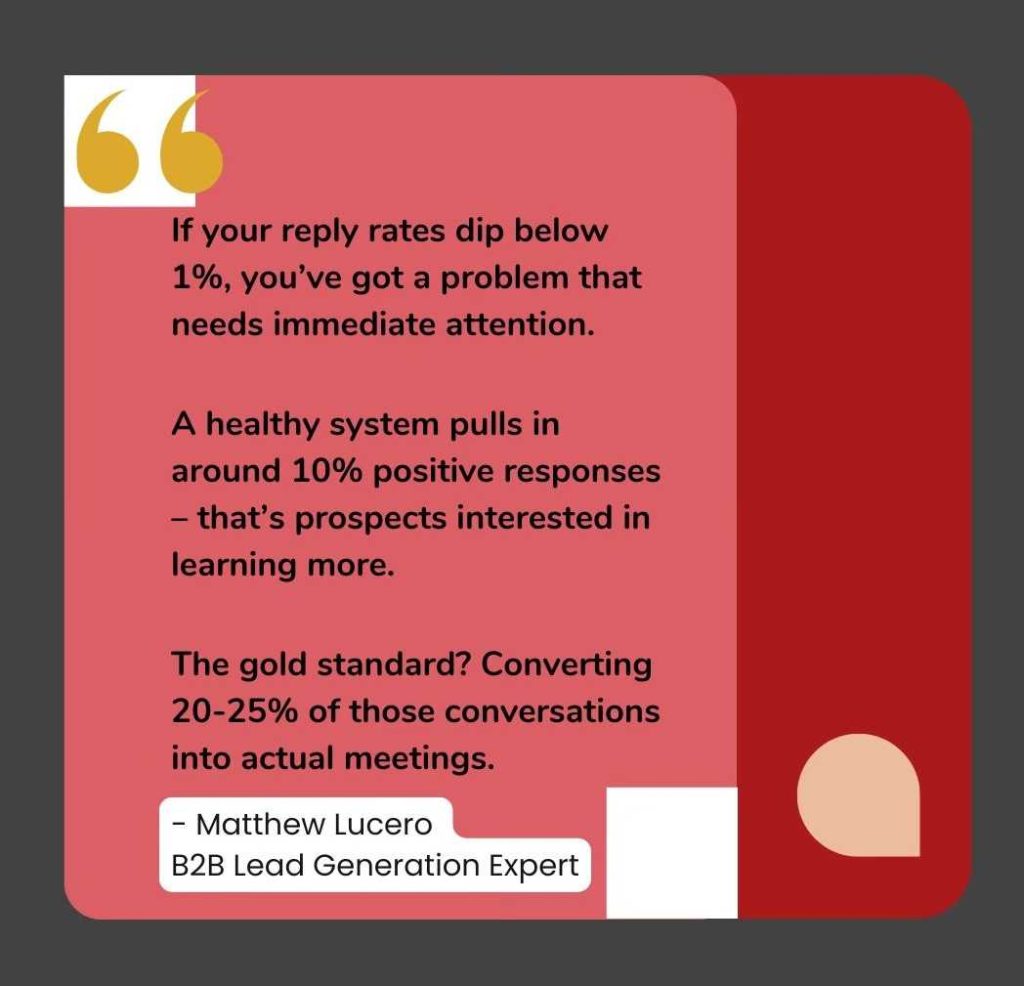
Industry expert Matthew Lucero (B2B Lead Generation expert) breaks it down simply: If your reply rates dip below 1%, you’ve got a problem that needs immediate attention. A healthy system pulls in around 10% positive responses – that’s prospects interested in learning more. The gold standard? Converting 20-25% of those conversations into actual meetings.
Watch these numbers monthly. They’re not just statistics – they’re clear signals telling you whether to stay the course or adjust your strategy.
Remember: These benchmarks apply whether you’re using basic AI SDRs or advanced AI Sales Agents. The difference? More sophisticated tools tend to hit the higher end of these ranges.
How to Cover Markets Without Burning Them
When you’re reaching out to potential customers, you don’t want to contact everyone at once – that’s like trying to eat an entire cake in one bite! Your Total Addressable Market (TAM) is a valuable resource that needs careful management. As Kyle Coleman’s analysis shows, blasting through your entire prospect list with AI tools is a rookie mistake that can quickly deplete your market opportunities.
1. Split Your Market: Market segmentation protects revenue
Instead, take a strategic approach to market coverage. Start by segmenting your market intelligently – group companies by size, industry, or potential value. Then, prioritise the segments that align best with your current sweet spot. This lets you focus your AI tools’ firepower where it matters most.
- Group similar companies together
- Start with the ones most likely to need your product
- Save some for later (you don’t want to use up all your opportunities at once)
2. Assign Clear Ownership
Most importantly, establish clear ownership rules. When multiple sales teams are involved, you need defined territories and handling protocols. This prevents the awkward situation of different teams accidentally targeting the same accounts while ensuring no valuable prospects fall through the cracks.
- Decide which salesperson handles which companies
- Make sure AI tools know these assignments
- Have a plan for handling companies that might interest multiple teams
Remember: A well-managed TAM is a sustainable source of opportunities. Don’t let automation tempt you into rushing through it.
How AI SDRs Deliver Business Impact
Having come this far, you must be wonderfing if advanced AI sales tools are worth the investment? Let’s look at what the numbers tell us about their impact on the bottom line.
McKinsey’s research reveals a compelling story: businesses using sophisticated AI approaches aren’t just seeing modest gains – they’re experiencing dramatic market share increases of up to 84%. Why? It comes down to the quality of engagement. When AI Sales Agents craft personalised outreach that resonates with prospects, they’re seeing response rates jump 2-3 times higher than traditional methods.
In your own inbox perhaps – you probably respond to messages that feel personally relevant while ignoring generic blast emails. The same principle applies here: better personalisation leads to better engagement, which translates directly to more meetings and closed deals.
The message is clear: in sales, smarter AI doesn’t just mean better efficiency – it means better results.
Conclusion
Companies succeed with AI SDRs when they follow a clear plan. First, choose the right tool by understanding whether you need an AI SDR or an AI sales agent. Second, set up clear rules for how your AI will work with prospects and your team. Third, carefully divide your market to avoid overcontacting prospects. Finally, track your results using key performance metrics. When done right, AI SDRs become a powerful sales tool that brings in real business results while saving your team’s time.