

Introduction
Remember when sales prospecting meant dialing through phone books and hoping someone picked up? Yeah, those days are dead. Now sales teams use AI for sales prospecting to find the right people and start conversations that don’t feel like spam. If you’re still up at 11 PM stalking prospects on LinkedIn, I’ve got news for you. There’s a way better approach that doesn’t involve ruining your eyesight or social life.
AI tools handle the boring stuff (finding contact info, researching companies, writing first drafts) so you can do what actually matters: talking to people and closing deals. This guide breaks down exactly how to use AI for sales prospecting without sounding like a robot or wasting money on garbage leads.
What Are AI Sales Assistants?
AI sales assistants are tools that do the research and outreach grunt work for you. Picture having a team member who works 24/7, never complains about boring tasks, and can research 500 companies while you’re getting coffee.
Here’s what they actually do:
- Find prospects who match what you’re looking for
- Dig up company info, news, and who makes decisions
- Write emails that don’t sound copy-pasted
- Track who opens what and follow up automatically
The cool part? They learn. Tell the AI that prospects from Series A startups convert better, and it adjusts. The more you use AI for sales prospecting, the smarter it gets at finding your people.
Regular prospecting tools just dump lists on you. AI sales assistants connect the dots. They notice when a company raises funding or launches in a new market and use that info to make your pitch actually relevant instead of generic noise.
How AI Sales Assistants Work and Help Startups
- AI for sales prospecting starts by eating data. It scans databases, websites, LinkedIn, news sites, and social media to build a full picture of each prospect. It spots patterns like which companies are hiring fast, who just changed CEOs, and which industries are expanding.
- Most startups burn time chasing bad leads. An AI sales assistant filters thousands of prospects to find the ones who actually need your product. It checks company size, revenue, location, tech stack, and signals like job posts or funding rounds.
- After finding good prospects, it writes outreach. Not the “Dear Sir/Madam” kind. The AI reads LinkedIn posts, blog content, and press releases to find real talking points.
- This matters for startups because you can’t afford to spam. Every message needs to work. AI sales assistants write emails mentioning specific challenges, recent wins, or connections. They test subject lines, tweak tone by industry, and time sends for best opens.
- Follow-ups are where AI for sales prospecting really wins. It tracks opens, clicks, and ghosting. Then it sends different follow-ups based on behavior. Soft nudge if they opened but didn’t reply. Different angle if they clicked but didn’t book.
Startups usually don’t have SDR teams. AI fills that gap while founders focus on building the product and closing.
How OmniEngage Helps Startups Book More Demos
OmniEngage’s Cynthia takes AI for sales prospecting past the usual stuff. Most tools say they personalize, but really just swap company names in templates. Cynthia actually researches.
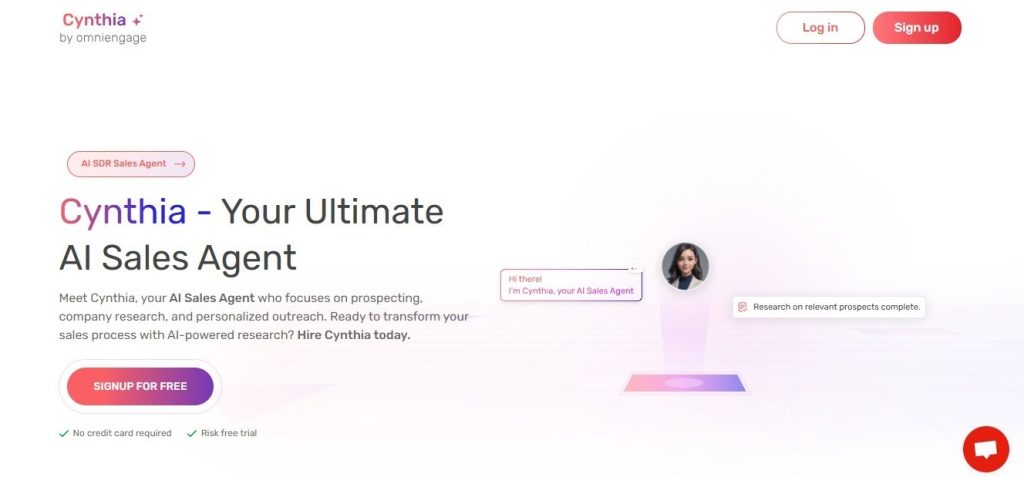
You tell Cynthia about your product, ideal customer, and the problems you solve. She finds companies matching your criteria. But here’s the difference. She doesn’t just find leads. She gets context.
Cynthia reads through websites, social profiles, and recent activity for private and public companies. Prospect launched a new product. Cynthia knows. Hiring for a role? She sees it. This becomes the base for personalized outreach using AI for sales prospecting.
Startups on OmniEngage book 3x more demos because messages relate to what prospects care about now. Not generic pain points. Actual challenges this company faces this quarter.
Cynthia plugs into Gmail, LinkedIn, and your CRM. No jumping between tools. Research, drafting, sending, and follow-ups happen in one spot. Your team spends less time on admin and more time talking to interested people.
The platform fills in missing data automatically. No email? Cynthia finds it. Need the decision-maker? She IDs them. This makes AI for sales prospecting work even for two-person startups.
OmniEngage doesn’t blast 10,000 leads with identical messages. Cynthia builds smaller sequences (50-100 highly researched prospects) where each email feels custom-written. Because it is.
Results show it. Better opens, better responses, better demos. Quality over quantity wins when you use AI for sales prospecting this way.
You can adjust Cynthia’s prompts as you learn. Do industries respond better to case studies? Change it. Technical founders want data, not stories? Shift tone. Your AI for sales prospecting strategy grows with your business.
OmniEngage shows analytics on what works. Which messages get responses, prospects engage, and what approaches tank? Every campaign gets smarter.
Setting Up Your AI Sales Prospecting System
Starting with AI for sales prospecting doesn’t require a CS degree. Here’s how to build something that works.
- Get specific on who you want. Don’t say “B2B SaaS companies.” Say “B2B SaaS, 20-100 employees, Series A funded in the last 18 months, selling to enterprise, North America-based.”
- The clearer your ideal customer profile, the better AI finds matches. Add size, revenue, location, tools used, and signals like hiring or funding.
- Connect Omniengage with CRM tools, email, and LinkedIn. AI for sales prospecting works best with access to existing data. It learns from past wins, which prospects converted, which messages worked, and which timing hit.
OmniEngage’s Cynthia integrates with major CRMs natively. Data flows without manual exports.
- AI needs your voice examples. Write 5-10 sample emails showing how you sound. Include scenarios: cold outreach, warm intro, post-demo follow-up, re-engaging old leads.
- AI analyzes these and makes new messages matching your style. You scale what works through AI for sales prospecting automation.
- Set triggers for prospect actions. Someone opens three times but doesn’t reply? Send a new angle. They click your calendar but don’t book? Follow up the same day.
- Triggers make AI for sales prospecting feel personal at scale. Prospects get relevant messages based on actual behavior.
- Start small. Maybe 50 prospects. Check what works. Look at opens, replies, and meetings. Adjust your profile if you’re getting the wrong leads. Fix messaging if opens don’t convert to responses.
- AI for sales prospecting improves with data. More campaigns mean the system learns your audience better.
Key Benefits of Using AI for Sales Prospecting
- Manual prospecting eats 20+ hours weekly for SDRs. Finding leads, researching companies, writing emails. AI for sales prospecting cuts that to 2 hours of review.
- Your team checks AI lists and messages instead of making them from nothing. Reps focus on calls and demos.
- AI tools pull from dozens of sources at once. They catch patterns humans miss. Like prospects mentioning certain pain points in blogs convert 40% better.
- This turns prospecting from guessing into science. You know buying signals. Best outreach timing. Which messages work per segment?
- Growing outreach used to mean hiring SDRs. With AI for sales prospecting, one person handles what used to require a team. AI researches hundreds while your rep talks.
- This matters for bootstrapped startups. Enterprise prospecting power without enterprise headcount.
- Humans have off days. Rush research behind quota. Forget follow-ups when busy. AI for sales prospecting stays consistent. Every prospect gets thorough research and outreach.
- Generic emails die in the inbox. Personalized messages from real research get opened. AI for sales prospecting lifts conversion at every stage. Better opens from relevant subjects. Better replies come from addressing needs. Better bookings from the right timing.
- Teams see 2-3x response improvement after adding AI tools. Getting 20 responses from 100 outreaches instead of 5 changes everything.
Industry Use Cases: AI for Sales Prospecting in Action
SaaS Selling to Marketing Teams
A marketing automation startup used AI for sales prospecting to find companies hiring marketing managers. AI caught that new managers evaluate tools in the first 90 days.
Cynthia researched each hire’s background and LinkedIn priorities. Messages congratulated the new role and offered resources for their challenges.
45% meeting rate versus 8% from generic emails. AI for sales prospecting wins on timing and relevance.
Fintech Targeting Growth Companies
A business loan fintech needed expanding companies. Their AI monitored news, jobs, and funding for growth signals.
When prospects announced new locations, AI for sales prospecting triggered outreach in 24 hours. Messages referenced expansion and showed how others funded growth.
Real-time approach got qualified leads cheaper than ads.
Consulting: Finding the Right Projects
A digital transformation consultancy needed companies at the right journey stage, not just any companies.
AI for sales prospecting analyzed websites, blogs, and exec statements for transformation keywords. Found companies talking about digital, but not implementing it yet.
Messages cited exec quotes about goals. Positioned the firm as informed. 60% meeting jump.
E-commerce: Analytics for Retailers
An e-commerce platform needed fast-growing stores. AI for sales prospecting tracked Shopify launches, product expansions, and traffic spikes.
AI caught growth spurts and triggered outreach explaining how others maintained momentum. Included specific data like product counts.
25% response because prospects saw immediate relevance.
HR Tech for People Teams
A recruiting software company targeted growing tech HR. AI for sales prospecting watches job posts for hiring velocity, not to fill roles.
10+ engineering posts in a month triggered research on current tools. Messages acknowledged hiring sprints and offered technical recruiting solutions.
Context-generated conversations with leaders facing the exact pain.
Common Mistakes With AI for Sales Prospecting
- AI for sales prospecting isn’t perfect. Review messages before sending. Check research accuracy. Match tone to brand.
- Some teams send AI content without checking and get weird messages with wrong info. Use AI for heavy lifting, but apply judgment before sending.
- Your first campaign won’t be your best. Monitor results, get feedback, and refine.
- Check analytics weekly. What gets responses? What converts? Feed insights back into AI.
- Blasting from new domains gets spam flagged. Warm up gradually. Start small, increase volume.
- AI for sales prospecting sends faster than reputation handles. Can email 500 doesn’t mean should.
- “Small businesses” is too broad. AI for sales prospecting needs specific parameters.
- Define an ideal customer with 10+ traits. Industry, size, tech, stage, location, signals. Specific targets better.
- AI handles research and initial outreach. Humans close deals. Don’t automate everything.
- Use AI to book qualified meetings. Let reps handle calls and demos. Human connection builds relationships and closes business.
Conclusion
AI for sales prospecting flips how teams find and talk to prospects. Instead of hours researching and writing cold emails, reps focus on real conversations with qualified leads. Tech handles grunt work. Humans build relationships and close.
Teams using AI for sales prospecting book more meetings, close more deals, and waste less time on dead ends. OmniEngage’s Cynthia proves smaller researched campaigns beat mass blasts.
Start simple. Pick one segment. Let AI research and draft. Review output, send campaigns, track results.
Stop researching at midnight. Stop generic ignored emails. Use AI for sales prospecting to work smarter, book more, and enjoy finding customers.
Ready to Transform Your Sales Prospecting?
Stop wasting hours on manual research and ignored emails. Try OmniEngage’s Cynthia and see how AI for sales prospecting books more demos, shortens cycles, and grows pipeline with less effort. Start Your Free Trial today.
Frequently Asked Questions
AI for sales prospecting uses artificial intelligence to find customers, research needs, and create personalized campaigns. Automates lead research, data enrichment, and message writing so teams focus on closing.
AI processes thousands of data points instantly. Finds exact-match prospects, researches challenges, crafts personalized messages from current events. Usually 2-3x better responses, saves 15-20 hours weekly.
Yes. Platforms like OmniEngage are priced for small teams and startups. ROI comes fast. One extra monthly deal usually covers costs.
No. AI handles research and initial outreach. Humans close. Tech removes tedious tasks so people can do calls, demos, and relationships.
AI SDR metrics measure personalized one-to-one sales outreach focused on meeting generation. Email marketing metrics track one-to-many campaigns for brand awareness and lead nurturing. These metrics typically show lower volume but higher conversion rates.
Small businesses often achieve better metrics than larger companies because they can focus on quality over quantity. Platforms like Cynthia AI provide enterprise-level research capabilities at startup-friendly pricing points.