


Are you a marketer looking to engage with consumers effectively? Today’s consumers use multiple channels to interact with brands. Social media, emails, or SMS are some ways to reach them. But getting your message in front of them at the right time can be challenging. That’s where omnichannel marketing comes in. An omnichannel marketing approach improves customer interaction and fuels a brand’s propensity. In this blog post, we’ll explore the benefits of omnichannel marketing for your business.
Multichannel vs. Integrated vs. Omnichannel Marketing
Have you received the same message from a business on different platforms like email, social media, or SMS? That’s called multi-channel marketing. It’s when marketers send the same message across various channels to interact with customers. This approach allows businesses to distribute content to reach audiences on different channels. Similar to this is an integrated marketing strategy.
An integrated marketing strategy aligns channels to reach the right people. For example, a business might launch social media ads that match its promotions on search engines. This way, they can combine cold targeting and customer acquisition through retargeting across channels. Integrating different channels can create a seamless customer experience and increase engagement.
Omnichannel marketing, on the other hand, is a data-driven or smart way to communicate with your customers seamlessly in their user journey. Businesses can measure customer interactions across various platforms using data and capture events. Then they can personalize their message to fit the customer’s needs. So, for example, when you purchase a product online and it gets delivered to your doorstep, you get an event notification to rate your delivery experience. You may be reminded to revisit the store with discounts or special offers targeted to you, later on.
Why Omnichannel Marketing is Important?
Omnichannel marketing ensures data attribution in the demand pipeline. Channel-specific insights further enables detailed targeting. Marketers can know where, when, and how to engage consumers better.
The key is that omnichannel marketing creates a consistent brand experience. Reaching customers who are interacting with your business online or offline is easier. The benefits of this approach are huge in connecting businesses with their customers in more innovative ways.
Omnichannel Marketing Benefits for Growth Marketers
Any growth marketing strategy focuses on buyer personas across channels like email, content marketing, social media, and online and offline events. However, B2B transactions are more complex, involving buyers at other endpoints in the user journey when customers make crucial decisions like problem identification, solution exploration, requirements building, and supplier selection.
B2B buyers interact with your business in different stages through a web search, reading online content, having an expert consultation, and engaging in social media conversations. In this setup, the marketing channels have multiple touchpoints where the prospect enters the pipeline. Therefore, if marketers have granular level data across the media mix, it will help refine campaigns better across the buyer’s journey.
Omnichannel marketing allows for –
1. Increased Reach with More Flexibility
Expanding brand visibility and reach is more manageable by using omnichannel marketing strategies. You can be present in multiple touch points across different channels, reaching a larger audience. This makes it easier for you to increase your acquisition channels.
2. Targeted Marketing Campaigns
As a growth marketer, your goal is to expand your target audience. With omnichannel marketing, you can deliver campaigns more accurately to different audience groups and segments. Moreover, it helps to personalize content to cater to different audiences by taking into consideration their location, geo-targeting, and time zone differences. If you want to send a campaign to audiences in different time zones, you can use location-based targeting to ensure that all users receive the message regardless of their availability.
3. Data Collection and Attribution
Aggregating sales data allows you to gather measurements and helps you to get more customer insights. With these increased customer insights you can improve your engagement and loyalty.
4. Improved ROI, Conversion Rates, and Sales
Employing omnichannel marketing can significantly enhance your Return on Investment (ROI) through the use of advanced targeting and personalized marketing strategies. It results in an upsurge in your conversion rates, leading to a notable increase in sales.
5. Aggregate and Person-Level Measurements
It gives you a unified view of analytics to understand audience engagement. As a marketer, you can have aggregate and person-level measurements of your campaigns. With aggregate data, you can see the overall performance of your campaigns, while person-level data allows you to analyze individual user interactions and create customer personas through data analysis instead of manually collecting data.
6. Detailed Insights into Channels and Trends
With omnichannel marketing, marketers can obtain detailed insights into the channels and trends that are most effective, both online and offline. This includes identifying which channels receive the most traffic, where conversions occur most frequently, and where user engagement is highest. Another benefit is the ability to track trends in customer behavior across both online and offline platforms.
What is Omnichannel Attribution?
The omnichannel marketing approach unifies customer data from multiple sources to gain a single customer view. This unified data is collected on one dashboard to be easily attributed to the buyer’s journey. For marketers, this means getting data on key consumer trends, having sales data from CRM platforms to narrow the consumer sales spend in the conversion funnel, and gaining channel-specific insights to engage consumers.
The data measurement involves insights into demographics, purchase patterns, proximity to shops, offline engagements, etc. This is a significant shift from a marketing-focused attribution to consumer-focused attribution, thereby being more relevant and engaging consumers better.
What does an omnichannel marketing strategy involve?
- Measuring data across customer touch-points
- Identification of different consumers in the buyer’s journey
- Managing cross-channel messaging
- Prioritizing channels and creating a sequence for cross-channel communication

How to Construct an Optimal Omnichannel Marketing Strategy?
There is no one-size-fits-all answer for integrating omnichannel marketing into your business strategy, as the best approach will vary depending on your business’s specific needs and goals. However, some general tips can help you get started. So, if you’re ready to begin incorporating omnichannel marketing into your business strategy, here are some tips to get you started:
1. Identify the channels that are most important for your business.
Only some channels are equally important for some businesses. You need to identify the most important channels for your business and focus your efforts on those channels. For example, if your business is primarily online-based, you’ll want to focus on online advertising and email campaigns. If your company relies heavily on in-store sales, you’ll want to focus on in-store displays and social media posts that drive traffic to your store.
2. Create a unified branding strategy.
When using multiple channels, creating a unified branding strategy is essential so that consumers know they’re interacting with the same company, no matter their channel. This includes using the same logo, color palette, fonts, and messaging across all channels. It’s also essential to ensure that all of your content is consistent in quality and tone of voice.
3. Choose the right tools for the job.
Not all marketing tools are compatible with every channel. So you need to choose the tools that are best suited for each channel and make sure they work together seamlessly. For example, if you’re running an online ad campaign, you’ll need an advertising platform that integrates with your website’s eCommerce system so you can track conversions and measure results.
4. Test and optimize regularly.
As with any other aspect of your business, it’s important to periodically test and optimize your omnichannel marketing efforts to ensure they’re providing the best results possible. This includes testing different content formats, messaging strategies, target audiences, and channels. It also includes tracking conversion rates and analyzing customer data to see what’s working and needs improvement.”
Read More: 10+ Examples of Brands Using Omnichannel Marketing
OmniEngage: An Omnichannel Marketing Platform for Bridging Marketing, Communications, and Business Goals
OmniEngage.co offers a solution for omnichannel marketing if you want to connect with customers through all channels. It helps you better identify each customer’s channel by classifying and segmenting your audience. The omnichannel marketing tool offers many touch points across the web, mobile, SMS, email, Facebook Messenger, and Whatsapp. In addition, Omni-Engage helps you to handle cross-channel marketing with ease.
To communicate across a wide range of channels, you must integrate with all your tools, control communications, and have intelligent filters. Select channels to find the right amount of communication per customer and the proper distribution across channels. OmniEngage focuses on this: helping you find the right communication distribution across channels.
Product Features of Omniengage
The OmniEngage omnichannel marketing tool offers the following product features:
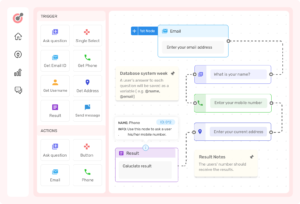
Workflow builder
The workflow builder is where you can set up a trigger that sets up action. Once a trigger is set up, an action is created for it. Establishing a connection between a stimulus and action is easy by joining the triggers with a node.
Communication
Through the OmniEngage app, you can communicate through web push notifications, emails, and in-app impressions.
Audience Segmentation
The builder lets you segment incoming audience communication according to your marketing campaign’s goals.
Data management
Data tags allow you to easily classify and get an overview of the different channels across the media mix.
Analytics
The analytics tab shows a breakdown of your campaign communication in a particular time frame by no. of messages and chats received. The Time-Frame can be selected from the Calendar Drop-Down menu on the top left of the page. A graphical representation of the number of received messages is displayed as a Histogram below the statics – the number received each day. A distinction is provided for Total Chats, Web Chats, and Social Chats here.
Conclusion
Omni-channel marketing steps include customer data management, identification of buyer profiles, audience segmentation, and intent and engagement scoring. With the OmniEngage omnichannel marketing tool, marketers can get real-time visualization of customer behavior. In addition, robust analytics can help in optimizing campaigns better as they establish cross-channel performance feedback. Therefore, if you’re looking for a comprehensive tool to enhance the customer experience across the customer journey, look no further than OmniEngage.co!