

Want to create a marketing strategy that truly puts the customer first? Customer centric marketing has emerged as a transformative force in making a brand succeed. Companies strive to create seamless experiences across all touchpoints, moving beyond mere transactions to build meaningful relationships.
According to Gartner, this shift is not minor – 80% of organizations expect to compete mainly based on customer experience. 1 It represents a fundamental change in how you interact with and value your customers. It’s not merely adopting new technologies; it’s reimagining the entire customer relationship. The evolution encompasses five key areas: personalization, consistent experiences, proactive communication, innovation, and employee empowerment.2 Customer centric marketing offers founders a powerful toolkit to drive growth and build customer loyalty.
What is Customer Centric Marketing?
Customer centric marketing is about putting the customer at the centre of everything you do in your marketing strategies. By understanding and meeting customer needs, preferences, and expectations, you can create awesome experiences for them. Why focus on this approach? According to a PwC survey, 73% of customers say customer experience is the number one thing they consider when deciding whether to purchase from a company.3 Well, with the rising significance of customer satisfaction, it has become crucial to stand out by being customer-centric. A customer centric marketing strategy includes:
- Personalization: Customizing products, services, and communications to individual customer preferences and behaviours.
- Data-driven insights: Utilizing customer data to inform marketing decisions and improve targeting.
- Omnichannel experience: Providing seamless interactions across all touchpoints, whether online or offline.
- Customer feedback loop: Actively seeking and incorporating customer feedback to continuously improve offerings.
- Employee alignment: Ensuring all employees understand and support the customer-centric mindset.
To understand your brand’s success, ask how often your customers come back. It is important to focus not only on keeping customers coming back for more but making sure they stay loyal to your brand as well. To measure how well you’re doing use omnichannel analytics. You can look at how many customers stick with you over time (retention) and how likely they are to keep choosing your brand over others (loyalty).
Customer retention is an important metric for a customer-centric strategy, but customer loyalty goes even deeper—it’s about creating an emotional bond and commitment to your brand. Both are essential for a customer-centric approach that focuses on customer engagement and customer satisfaction. Retention is about keeping transactions going, while loyalty is about exceeding expectations and aligning with values.
Creating a Customer Centric Marketing Strategy
When it comes to a customer centric marketing strategy, creating personalized and targeted marketing messages and experiences for each customer is essential. Instead of treating customers as part of a generic audience, it’s important to provide a personalized journey for them, where every interaction resonates more with their specific needs. AI plays a big role in this by helping brands automate processes and become more flexible in responding to market changes, which ultimately cuts costs.
Let’s dive into how to create a customer centric marketing strategy:
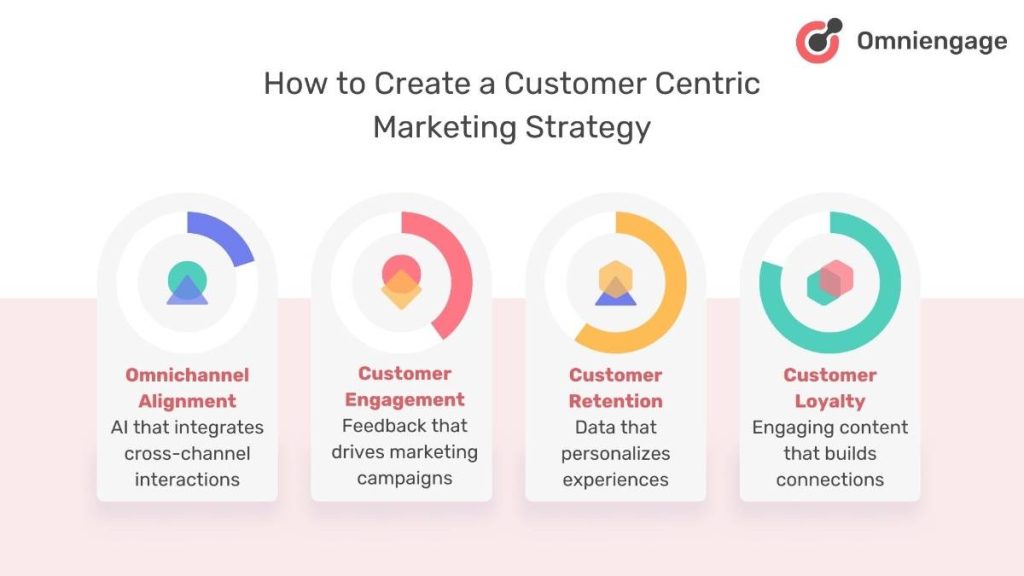
1. Omnichannel Alignment
Customers engage with your business through mobile apps, social media, and offline stores. Combining data from different sources into one platform gives you a unified view of customer behaviour online and offline.
By integrating AI into your tech stack, you can efficiently manage all your inbound and outbound leads and their specific campaigns. Plus, having a centralized system for integrating and analyzing customer information makes everything easier to handle.
Get the full picture with a unified view of engagements
Omnichannel marketing helps you understand where and how customers engage, identify the best channels for specific products/services, and determine which channels lead to conversions. For example, Facebook messenger is great for order updates, while YouTube is best for how-to content.
Integrate customer interactions across channels
To place customers at the centre, maintaining a consistent experience across all customer touchpoints is important. This requires coordinating online and offline interactions to eliminate friction. Connect the dots by ensuring consistent messaging and branding across channels, guided by customer needs.
2. Customer Engagement
To serve your customers better, you have to anticipate inquiries by proactively understanding each customer’s context. By carefully tracking customer behavior across all interaction channels, you can get there quicker. Conducting thoughtful market research through surveys, feedback, and focus groups also provides invaluable insights into your customers’ priorities and pain points.
Improve customer experiences with better insights
Customer centric brands create specialized content and campaigns to align with customer preferences. Solicit feedback across the entire customer journey to quickly respond to evolving customer needs. Refining your marketing based on data insights to ensure your customers have the best experience possible and your brand stays customer-focused is a great step for stronger customer engagement.
3. Customer Retention
Implement automated personalization strategies to tailor offerings and communications to individual customer needs. Use data for advanced analytics and employ AI to create rich customer profiles. These profiles enable hyper-personalization at scale to drive retention.
Innovation and continuous improvement in campaigns
It’s often difficult to get customers to share their data, but a customer’s data gives you the best insight into how to design your marketing campaigns. A fun way to get customers to willingly share their information is by offering rewards or a quiz or assessment that has a valuable take for them. This sets the stage for personalized marketing.
4. Customer Loyalty
When you actively listen to your customers and learn about their real-world challenges, you empower yourself to deliver marketing messages and content that genuinely speaks to them and alleviates their difficulties.
Use captivating content that makes creating connections easier
Rather than hard sales pitches for products and services, focus on sharing useful stories and solutions that align with your customers’ values and address their real needs. Make every interaction count by incorporating interactive elements like polls, quizzes, and user-generated content to encourage greater participation and dialogue.
Customize your marketing for each client
By this stage, you have a great insight into each client’s personal journey. Enhance your interactions proactive and relevant communications. Use the data you gather to personalize marketing strategies. When content feels genuine and adds value for your customers, they become more invested and engaged with your brand over the long term.
Customer Centric Marketing Examples + Analysis
1. Amazon Prime: Build Enduring Customer Relationships
Customer-centricity is about building enduring relationships. When a brand’s core values align with those of its customers, it signifies a commitment to understanding and valuing the customer beyond short-term gains. This shared commitment forms the basis for long-term loyalty.
Case: Amazon Prime’s Long-Term Commitment: Amazon’s unwavering commitment to long-term customer satisfaction forms the bedrock of its success. This approach, rooted in Jeff Bezos’s 1997 Letter to Shareholders, outlines the “Day 1” mentality that prioritizes customer obsession, long-term focus, and continuous innovation.
Amazon’s relentless focus on eliminating friction exemplifies customer-centric marketing at its finest. Their approach demonstrates how removing barriers in the customer journey can significantly enhance user experience and drive loyalty.

Build stronger connections with your customers.
By making purchases almost invisible, Amazon enhances customer experience and strengthens long-term relationships. Adopting a “friction hunter” mindset can help brands emulate this success. This involves:
- Mapping the customer journey to identify pain points
- Continuously innovating based on customer needs
- Regularly gathering and acting on customer feedback
- Prioritizing long-term customer satisfaction over short-term gains
2. Starbucks: Mutually Beneficial Experiences
Customer centricity means making products, services, and experiences to meet customer expectations. When customers are comprehensively understood and supported, they offer loyalty in return.
Case: Starbucks Rewards Program: Starbucks builds these bonds through its rewards program that offers tailored perks based on purchase history. Customers receive personalized promotions and freebies while Starbucks gains data to enhance experiences. The result is a reliance where people actively accrue points because perks provide real value.
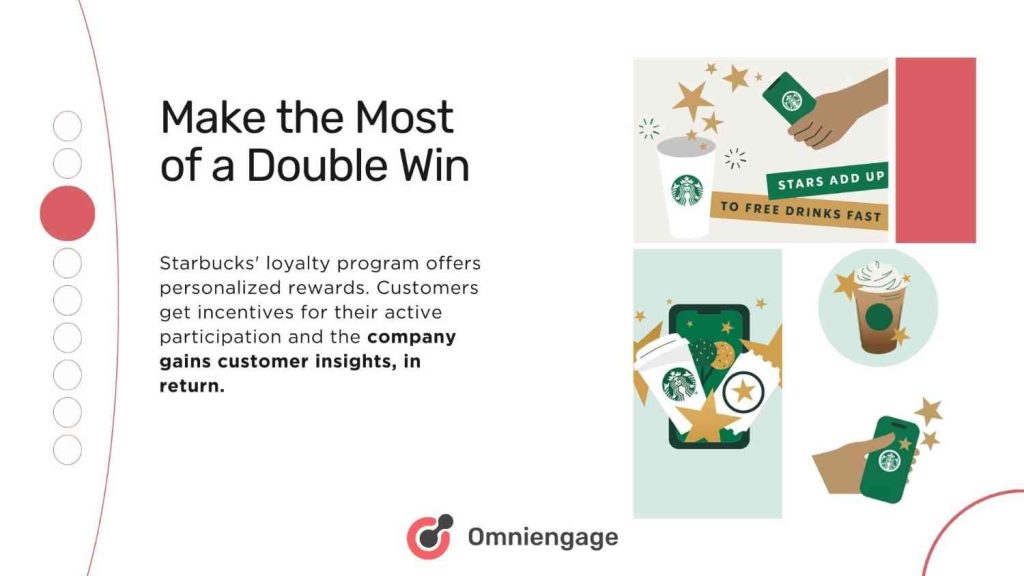
Create a win-win relationship with customers.
The key is creating a customized loyalty lifecycle that evolves with the customer. Welcome them, understand their preferences, and delight with relevant offers. Make it easy to redeem points and provide elite status for your best advocates. This establishes a community where patrons feel understood and incentivized to stay committed.
3. Dove: It’s More Than Just Discounts
Customer centricity goes beyond simply offering transactional benefits (in comparison to customer retention). It’s about understanding and meeting the unique needs of each customer. Value-driven consumers want to buy from brands that foster emotional bonds by aligning with customer beliefs.
Case: Dove: Consider Dove’s “Real Beauty” campaign. By boldly challenging restrictive stereotypes, Dove tapped into the deep-seated desire for inclusivity and self-acceptance among its customer base. Sales soared, proving that shared principles drive resilience even in difficult times.
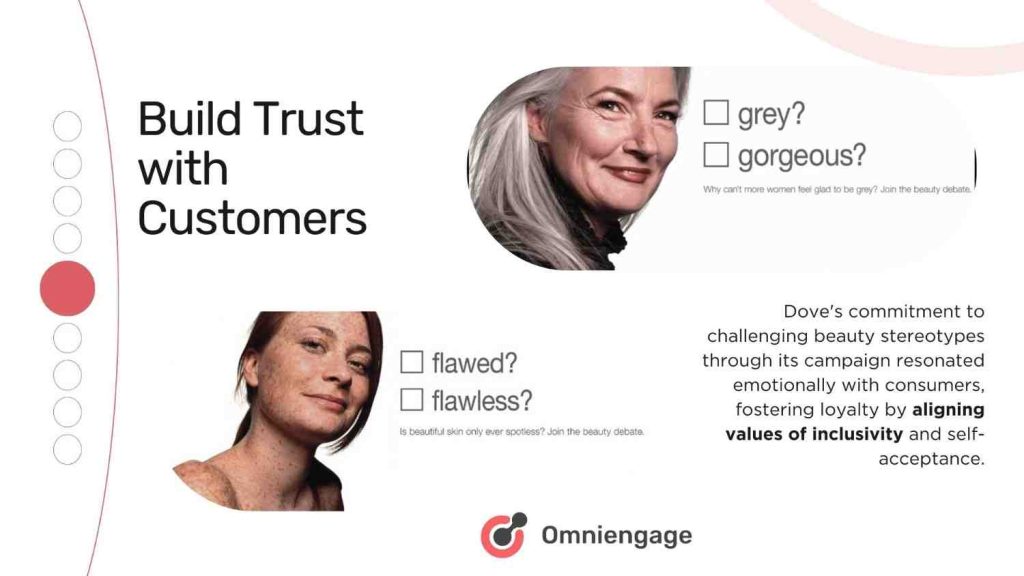
Build trust with your customers.
This ability to resonate on an emotional level stems from a commitment to true customer centricity. Customers can sense when a brand genuinely cares about aligning with their values versus temporary lip service. Take Patagonia’s tireless environmental advocacy that informs everything from its supply chain to storefronts. Consumers remain loyal to Patagonia because protecting Mother Earth matters to them too.
The ultimate goal is an ecosystem where customers feel heard. Nurture this spirit of shared success, and your most loyal followers will stay by your side.
Wrap Up
To create a customer centric marketing strategy start with the collection of data and refine your strategy to reach higher customer retention and loyalty metrics, analyze feedback and insights, create engaging content, cross-channel and organizational alignment, and utilize AI to gain deeper insights into customer behavior. If you want to deliver personalized, engaging experiences, which in turn build long-term customer relationships get started with OmniEngage.
- Gartner Report: Realizing the benefits of superior CX ↩︎
- McKinsey Opinion: Turning Telco into Customer Centric ↩︎
- PwC Survey: Future of customer experience ↩︎